Es mostren els missatges amb l'etiqueta de comentaris Photography. Mostrar tots els missatges

dijous, 24 de juliol del 2014

Dorothea Lange and The Great Depression - Dorothea Lange i la Gran Depressió


Dorothea Lange, fotoperiodista (25 de maig de 1895, Hoboken (Nova Jersey), Estats Units - 11 d'octubre de 1965, San Francisco, Califòrnia). 

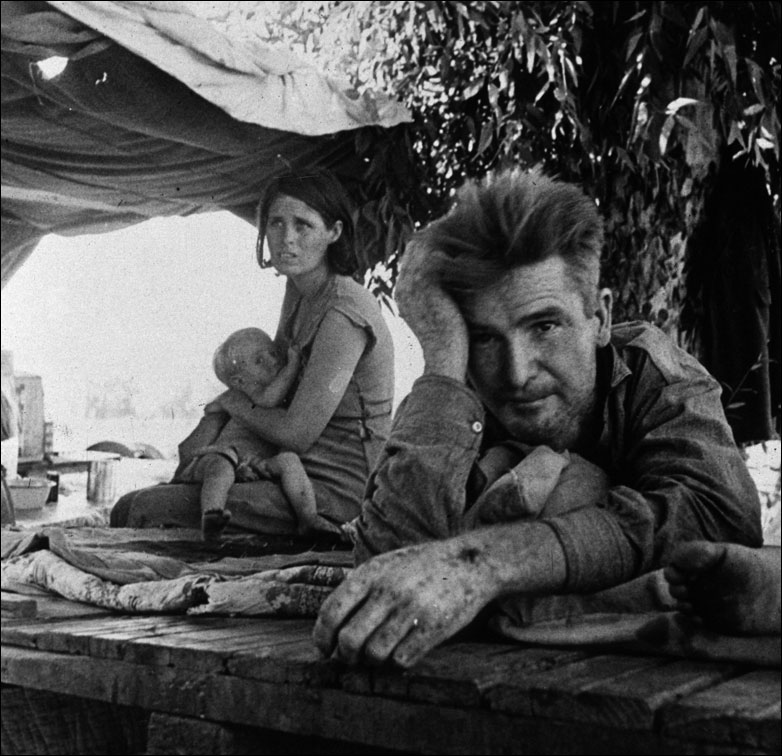
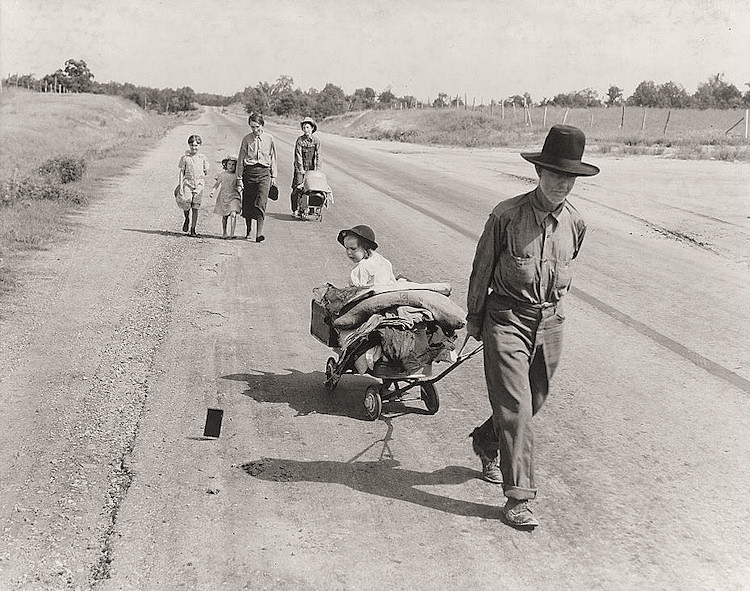
La Gran Depressió per la qual passava Estats Units va portar a molta gent a viure als carrers i a abandonar les seves cases per buscar feina allà on n'hi hagués. Dorothea Lange estava molt sensibilitzada amb aquesta problemàtica i va fer servir les seves fotografies com un mètode de denúncia. Va començar a retratar captaires als carrers, aturats, etc.

Aviat va ser contractada per l'Estat i va començar a treballar per a l'Administració per a la Seguretat Agrària. La seva tasca consistia a documentar la pobresa regnant a les zones rurals del país.

En aquesta època també va col · laborar amb el seu marit en l'enregistrament d'un documental sobre les conseqüències de la crisi del moment.
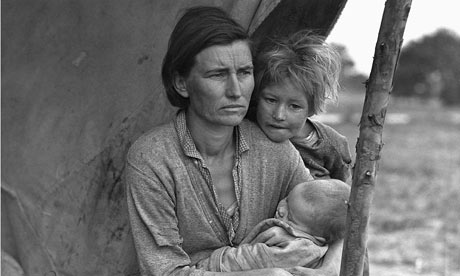
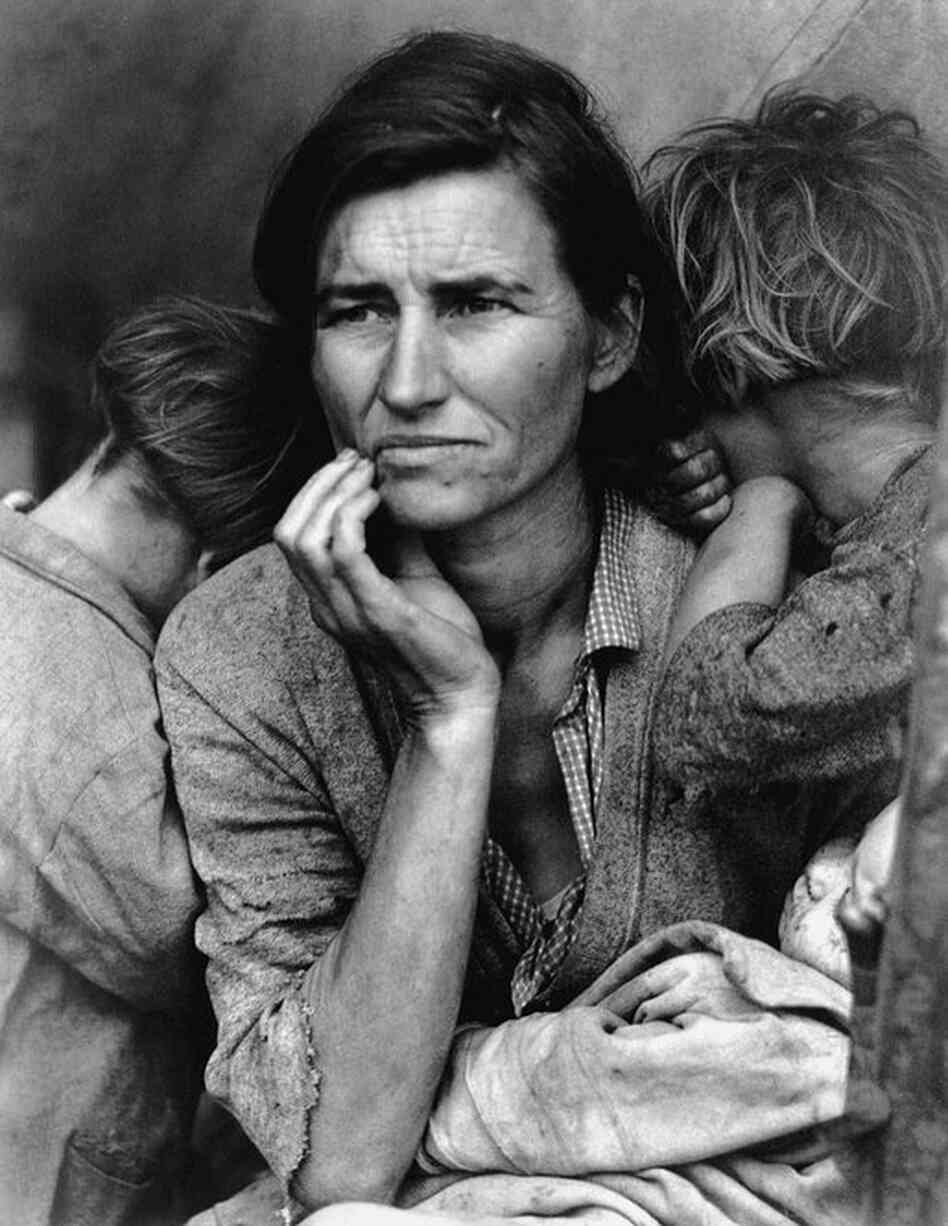
Dorothea Lange es va fer mundialment coneguda amb la seva sèrie de fotografies titulada "Mare Migrant". Aquestes imatges van ser preses a Califòrnia el 1936 i s'hi veu a Florència Owens Thompson i als seus tres fills.

Aquest conjunt de retrats defineixen clarament la personalitat del treball de Lange. Pren les seves fotografies de manera propera, clara, concisa i d'una forma molt tendra. En elles reflecteix la situació per la qual estan passant les persones que retrata, però sense fer-los perdre gens de dignitat.

Dorothea va patir durant tota la seva vida d'una feble salut i va morir de càncer als 70 anys.

**

Born in Hoboken, New Jersey, Dorothea Lange (1895-1965) was an influential American documentary photographer and photojournalist. 

With the onset of the Great Depression, Lange turned her camera lens from the studio to the street. Her studies of unemployed and homeless people captured the attention of local photographers and led to her employment with the federal Resettlement Administration (RA), later called the Farm Security Administration (FSA).

In December 1935, she married economist Paul Schuster Taylor, Professor of Economics at the University of California, Berkeley and together they documented rural poverty and the exploitation of sharecroppers and migrant laborers.

From 1935 to 1939, Dorothea Lange's work for the RA and FSA brought the plight of the poor and forgotten — particularly sharecroppers, displaced farm families, and migrant workers — to public attention. Distributed free to newspapers across the country, her poignant images became icons of the era.

Lange's best-known picture is titled "Migrant Mother." The woman in the photo is Florence Owens Thompson. In 1960, Lange spoke about her experience taking the photograph:


I saw and approached the hungry and desperate mother, as if drawn by a magnet. I do not remember how I explained my presence or my camera to her, but I do remember she asked me no questions. I made five exposures, working closer and closer from the same direction. I did not ask her name or her history. She told me her age, that she was thirty-two. She said that they had been living on frozen vegetables from the surrounding fields, and birds that the children killed. She had just sold the tires from her car to buy food. There she sat in that lean-to tent with her children huddled around her, and seemed to know that my pictures might help her, and so she helped me. There was a sort of equality about it.


Fonts/Sources:

dijous, 26 de juny del 2014

dijous, 29 de maig del 2014

The Making-of...


Avui porto el "Making-of..." de les meves fotografies al blog per a dies difícils i sense temps. Normalment disposo d'equip adequat; tinc una Canon 40D que acompleix amb les expectatives. Però entre setmana treballo les hores de llum dins d'una oficina i només disposo de 20 minuts amb llum a l'hora de dinar i me les he d'enginyar per poder fer fotos pels posts. Després de donar-hi milers de voltes i de decebre'm amb la llum artificial vaig trobar una solució per poder fer les fotos amb llum.


¿I que necessito? Cartolines de colors i un suport. Aquí és on he fet anar la inventiva; faig servir el seient del cotxe de suport. Si, si, ho heu llegit bé; el cotxe em proporciona el suport i la solitud necessària per poder fer les fotos amb tranquil·litat. L'aparco on em sembla; normalment un lloc amb poca gent i que tingui ombra al seient per evitar ombres a les fotos.


I heus aquí la prova del que explico...

**


Today I explain you about the making-of photographs for the blog on busy days with no time. Usually I use the suitable equipment; I own a Canon 40D that fulfills my expectations. But during the week, I work during daylight hours closed in an office and I only have 20 minutes as free time at lunch time, so I've to manage to take photographs for the posts during this gap of time. After so much thinking about it and getting very disappointed with artificial light I've finally found a solution to take photographs with light.

What do I need? Color cardboards and a basis support. This is where I achieved ingenuity; I use the car seat as basis support. Yes, you've read it right; the car provides me both; the basis support and necessary solitude to take photos with ease. I park it usually on places with few people and under the shadow, so that I avoid shadows in the photographs.

And here is proof of it ...


dimarts, 13 de maig del 2014

Girona Temps de flors – Girona Flower Time Festival


Aquest cap de setmana hem estat a Girona per viure el Temps de Flors. Aquí teniu algunes de les meravelles que s’hi poden veure aquest any:

**

Last weekend we’ve been in Girona to visit the Flower Time Festival. Here are some of the wonderful masterpieces we’ve visited this year:


dimarts, 18 de març del 2014

Vivian Maier a late discovered photographer - Vivian Maier una fotògrafa descoberta a títol pòstum


Vivian Dorothea Maier (February 1, 1926[citation needed] – April 21, 2009) was an American street photographer.

Many details of Maier's life are unknown. She was born in New York City, the daughter of Maria Jaussaud and Charles Maier, French and Austrian respectively. She moved between the U.S. and France several times during her childhood, living with her mother in the Alpine village of Saint-Bonnet-en-Champsaur near to her mother's relations. Her father seems to have left the family for unknown reasons by 1930.

In 1951, at the age of 25, Maier moved from France to New York, where she worked in a sweatshop. She made her way to the Chicago area's North Shore in 1956. And for approximately 40 years, she worked on and off as a nanny, staying with one family for 14 years. 

The families that employed her described her as very private and reported that she spent her days off walking the streets of Chicago and taking photographs, most often with a Rolleiflex camera.

During those years, she took more than 100,000 photographs, primarily of people and cityscapes in Chicago.

Toward the end of her life, Maier may have been homeless for some time. She lived on Social Security and may have had another source of income. The children she had cared for in the early 1950s bought her an apartment in the Rogers Park area of Chicago and paid her bills. In 2008, she slipped on ice and hit her head. She did not fully recover and died in 2009 at the age of 83.

Her photographs remained unknown and mostly undeveloped until they were discovered in 2007 by a local Chicago historian and collector, John Maloof; a 26-year-old real estate agent also president of the Jefferson Park Historical Society in Chicago. While working on a book about the Chicago neighbourhood of Portage Park, he bought Maier's photographic legacy – many negatives still undeveloped –.

**

Aquesta és una historia d’un talent fotogràfic descobert a títol pòstum!

Vivian Maier (1 de febrer de 1926, Nova York - 21 d'abril de 2009, Chicago ) va ser una fotògrafa nord-americana aficionada, que va treballar com a mainadera a Chicago durant quatre dècades .

Va passar la seva infància entre França i els Estats Units . Amb 4 anys,  el seu pare la va abandonar i es va quedar amb la mare. El 1951 amb 25 anys va anar a Nova York i el 1956 a Chicago, on va passar la major part de la seva vida.

Maier no revelava molts dels seus rodets perquè no s'ho podia permetre. Només feia fotos sense que aparentment li preocupés el resultat final .
Cap al final de la seva vida va quedar sense habitatge però els 3 fills Ginsberg als quals havia fet de mainadera de petits li van pagar el lloguer d'un apartament i en van tenir cura fins a la seva defunció el 2009.

El desembre de 2008 va caure quan caminava sobre gel i es va colpejar al cap. La van portar a la residència d'avis a Oak Park on va morir 4 mesos després, als 83 anys

El 2007 John Maloof estava buscant informació per escriure un llibre d'història sobre Chicago, anomenat “Portage Park” i en una subhasta va comprar un arxiu de fotografies per uns 380 dòlars. La casa de subhastes havia adquirit les pertinences d'un magatzem guardamobles perquè havia deixat de pagar les quotes.

Gràcies a la família Ginsberg per a la qual Vivian havia treballat durant 17 anys, John Maloof va poder recuperar 2 calaixos grans que havien de ser tirats a les escombraries. Contenien correspondència, retalls de diari i rodets fotogràfics en color de Vivian Maier.

El treball fotogràfic de Maier mostra escenes de carrer de Chicago i New York en les dècades de 1950 a 1990.

Fonts/Sources:

Street Fotos/Fotos de carrer:


dijous, 23 de gener del 2014

Guided tour at Hospital de Sant Pau - Visita a l'Hospital de Sant Pau

La setmana passada vaig fer una sessió formativa a l’Hospital de Sant Pau de Barcelona i després de la formació ens van fer una visita guiada pel recinte; inclós el pavelló de l’Administració que està restaurat i es pot visitar des de fa només un mes.

**
Last week I did a training session at the Hospital de Sant Pau in Barcelona and after the training we were given a guided tour.


dimecres, 4 de desembre del 2013

Advent snow fall - Advent amb neu

Aquest any l’Advent ha arribat carregat de neu!!

Dissabte, quan vam arribar a casa els padrins estava caient la primera nevada de la temporada. Després de refer-me una mica del fred, com si es tractés d’una reportera intrépida, vaig agafar la càmara i vaig demanar que m’acompanyés l’ajudant amb el paraigües (mig remugant, tot sigui dit) i vaig fer un miler de fotos. Aquí en teniu una petita mostra...

**

This year, Advent has arrived with the first snow fall of the season!


Saturday, when we went to visit my husband parents in the Pyrenees, it was falling snow. For those not living in Spain, a snow fall is something to talk about on the TV news ;-o) After a short break to "warm me up", as if I was an intrepid reporter, I took the camera and asked for some help to my “assistant” with the umbrella (he was muttering, by the way) and I took thousand pictures. Here is a small sample...


I així ens vam divertir després de la nevada! - And so we had some fun after the snow fall!


dilluns, 2 de desembre del 2013

Goodbye Autumn - Adéu tardor

Mireu quin arbre més bonic teniem fa una setmana a Sant Cugat!


La tardor que jo conec
(Dàmaris Gelabert)

La tardor que jo conec
té gust a raïm i cep,
d’olivera i pluja fina,
de bolets amb julivert.
La tardor que jo conec.
La tardor que jo conec
les petjades fan crec-crec,
botes d’aigua i un paraigua
i el vent que s’enduu barrets.
La tardor que jo conec.
La tardor que jo conec
porta figues i fruits secs,
mandarines i magranes
i el primer dia de fred.
La tardor que jo conec.

Després d'aquesta canço tan bonica, només puc dir:


**

Look, what a beautiful tree we had last week in Sant Cugat!


Falling leaves

All the leaves are falling down,
Orange, yellow, red and brown.
Falling softly as they do,
Over me and over you.
All the leaves are falling down,
Orange, yellow, red and brown.

It is about time to say:


LinkWithin

Related Posts Plugin for WordPress, Blogger...